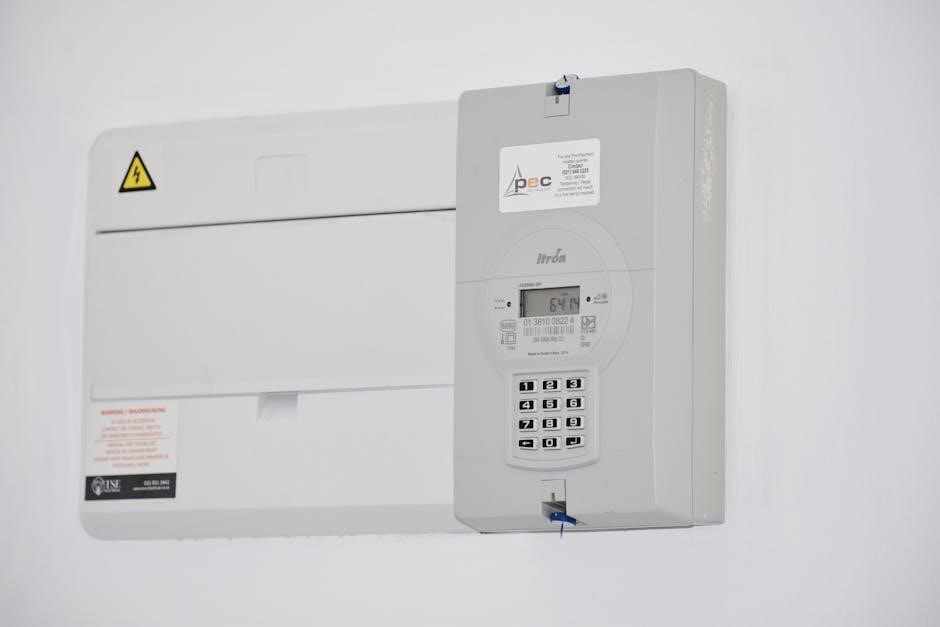
ACS320 Manual: A Comprehensive Guide
This comprehensive guide details the ABB ACS320 drive, offering manuals and resources in PDF format, including firmware guides and option modules instructions.
Published September 4, 2018 (Revision F), it covers installation, maintenance, and operation for drives ranging from 0.5 to 30 hp.
The ABB ACS320 drive represents a versatile and reliable solution for a wide range of industrial applications, offering precise motor control and energy optimization. This drive series, covering 0.5 to 30 horsepower, is designed for simplicity and ease of use, making it suitable for both basic and more demanding tasks.
As detailed in the ACS320 drives user’s manual (3AUA0000062599), the drive provides efficient control of AC induction motors, enhancing process performance and reducing operational costs. The manual itself, available in PDF format, serves as a primary resource for understanding the drive’s capabilities and proper implementation.
ABB provides comprehensive documentation, including short-form user manuals and guides for specific functionalities like capacitor reforming, ensuring users have the necessary information for successful operation and maintenance.
Drive Firmware and Manual Versions
Maintaining accurate records of both drive firmware and manual versions is crucial for effective troubleshooting and ensuring compatibility. The primary user manual for the ACS320 drives (0.5 to 30 hp) is identified by code 3AUA0000062599, with Revision F being effective as of September 4, 2018.
ABB regularly updates its drive firmware to enhance performance, address potential issues, and introduce new features. Correspondingly, manual revisions are released to reflect these changes. A short-form user manual (3AUA0000086933) is also available, offering a condensed guide for quick reference.
Accessing the latest documentation is vital; ABB provides a document library online where PDF versions of manuals and guides can be downloaded. For versions not found there, contacting an ABB representative is recommended.
Document Library and Resources
ABB provides extensive documentation and resources for the ACS320 drive series, readily accessible to users. The primary source is the online document library, offering downloadable PDF manuals and guides. This library includes the comprehensive ACS320 drives (0.5 to 30 hp) user’s manual (3AUA0000062599) and a concise short-form version (3AUA0000086933).
Beyond the core drive manual, ABB offers specialized guides for option modules like the MFDT-01 FlashDrop (3AFE68591074) and MREL-01 output relay module (3AUA0000035974). Installation instructions for MUL1 modules (various codes) are also available.
If required documentation isn’t found within the online library, ABB encourages users to contact their local ABB representative for assistance in obtaining the necessary materials.
Safety Precautions During Installation
Prior to installing the ACS320 drive, strict adherence to safety guidelines is paramount. The user’s manual emphasizes safety during both installation and maintenance procedures. Always disconnect power before commencing any work on the drive or connected equipment. Ensure proper grounding to prevent electrical shock and minimize electromagnetic interference.
Qualified personnel should perform all installation tasks, following local and national electrical codes. Carefully inspect all components for damage before installation. Maintain adequate clearances around the drive for proper ventilation and access for maintenance.
Pay close attention to warning symbols within the documentation, as they indicate potential hazards. Ignoring these precautions could result in personal injury or equipment damage.
Safety Precautions During Maintenance
Maintaining the ACS320 drive requires strict adherence to safety protocols. As highlighted in the user manual, always disconnect and lock out power before performing any maintenance tasks. Allow sufficient time for capacitors to discharge completely to avoid electrical shock – refer to the guide for capacitor reforming procedures.
Qualified personnel should only undertake maintenance, utilizing appropriate personal protective equipment (PPE). Regularly inspect the drive for signs of wear, damage, or contamination. Ensure proper ventilation and avoid operating the drive in hazardous environments.
Be cautious when handling internal components and follow the manufacturer’s recommendations for cleaning and inspection. Firmware updates should be performed carefully, following the provided instructions.

ACS320 Drive Hardware
The ACS320 drive hardware includes the control board, components, input/output connections, and a user-friendly keypad for drive control and monitoring.
Drive Dimensions and Mounting
Proper installation is crucial for optimal ACS320 drive performance and longevity. The drive’s physical dimensions are a key consideration when planning its integration into your machinery or control panel. Ensuring adequate space for ventilation is paramount to prevent overheating and maintain reliable operation.
Mounting the ACS320 requires a solid, stable surface capable of withstanding the drive’s weight and potential vibrations. Refer to the user manual (3AUA0000062599) for detailed dimensional drawings and mounting guidelines. Correct mounting minimizes noise and ensures secure operation.
Pay close attention to recommended clearances around the drive for maintenance access and proper airflow. Incorrect mounting can lead to premature failure and void the warranty.
Control Board and Components
The ACS320 drive’s control board houses the core intelligence and power electronics responsible for precise motor control. Key components include the processor, input/output circuitry, and power semiconductors. Understanding these elements is vital for effective troubleshooting and maintenance.
The manual (3AUA0000062599) provides detailed schematics and component identification. Careful inspection of the control board can reveal potential issues like damaged capacitors or loose connections. Always disconnect power before accessing internal components.
Proper handling of the control board is essential to avoid electrostatic discharge (ESD) damage. Use appropriate grounding techniques and ESD-safe tools. Replacement components should be genuine ABB parts to ensure compatibility and performance.
Input and Output Connections
The ACS320 drive features a variety of input and output connections for control signals, feedback devices, and motor power. These connections facilitate communication between the drive, the motor, and external control systems.
The user’s manual (3AUA0000062599) details the terminal assignments for all input and output signals. Proper wiring is crucial for safe and reliable operation. Incorrect connections can lead to drive faults or motor damage.
Input connections accept signals for start/stop, speed reference, and fault reset. Output connections provide signals for motor ready, fault indication, and speed feedback. Ensure all connections are secure and properly insulated.
Keypad and Display Interface
The ACS320 drive incorporates an intuitive keypad and display interface for local operation and parameter configuration. This interface allows users to monitor drive status, adjust settings, and troubleshoot potential issues without needing external programming tools.
The display provides real-time information on motor speed, current, voltage, and fault codes. The keypad enables navigation through menus and modification of drive parameters. Refer to the user’s manual (3AUA0000062599) for detailed instructions on keypad operation.
Understanding the display messages and keypad functions is essential for effective drive control and maintenance. The interface simplifies commissioning and allows for quick adjustments in the field.

ACS320 Drive Parameters and Programming
Parameter groups within the ACS320 allow for precise motor control and customization. Autotuning optimizes performance, while speed and torque parameters offer flexibility.
Parameter Groups Overview
The ACS320 drive utilizes a structured parameter group system for efficient configuration and control. These groups categorize parameters based on functionality, simplifying the programming process for users.
Key parameter groups include Motor Control, Drive Control, Input/Output, and Faults & Diagnostics. The Motor Control group focuses on settings related to the connected motor, such as nominal voltage, current, and speed. Drive Control manages overall drive behavior, including acceleration and deceleration times.
Input/Output parameters configure digital and analog signals for communication with external devices. The Faults & Diagnostics group provides access to error codes and diagnostic information, aiding in troubleshooting. Understanding these groupings is crucial for effective ACS320 programming and optimization.
Motor Data and Autotuning
Accurate motor data input is essential for optimal ACS320 drive performance. Key parameters include motor nominal voltage, current, frequency, speed, and power factor. Incorrect values can lead to suboptimal operation and potential motor damage.
The ACS320 offers an autotuning feature to simplify motor parameter identification. This process automatically measures motor inductance and resistance, eliminating the need for manual calculations. Autotuning enhances drive efficiency and responsiveness.
Prior to autotuning, ensure the motor is disconnected from the load and mechanically secured. Following autotuning, verify the identified parameters against the motor nameplate data for accuracy. Proper motor data and autotuning contribute to reliable and efficient drive operation.
Speed Control Parameters
The ACS320 drive provides extensive speed control parameter adjustments for tailored performance. Key settings include maximum and minimum speed limits, acceleration and deceleration times, and speed reference scaling.
Ramp times directly influence the smoothness of speed changes. Shorter times yield quicker responses, while longer times minimize mechanical stress on the driven equipment. The drive supports multiple ramp profiles for diverse applications.
PID (Proportional-Integral-Derivative) control is available for precise speed regulation. Tuning PID gains optimizes responsiveness and stability, maintaining the desired speed despite load variations. Careful parameter configuration ensures optimal speed control performance.
Torque Control Parameters
The ACS320 drive offers robust torque control capabilities through dedicated parameter settings. Users can define maximum and minimum torque limits, ensuring operation within safe boundaries and preventing equipment overload.
Torque boost and torque reduction parameters allow for fine-tuning performance in demanding applications. These adjustments compensate for varying load conditions and optimize responsiveness. The drive supports both open-loop and closed-loop torque control modes.
Current limit settings are crucial for protecting the motor and drive from excessive current draw. Proper configuration of torque control parameters ensures precise and reliable torque regulation, enhancing application performance and safety.

ACS320 Drive Operation
Successfully operate the ACS320 by mastering starting, stopping procedures, monitoring drive status, and understanding fault indications for optimal performance.
Starting and Stopping the Drive
The ACS320 drive offers versatile starting and stopping methods to suit diverse application needs. Initial startup requires careful verification of all wiring connections and parameter settings, ensuring alignment with the connected motor specifications.
Drive activation can be achieved through external control signals, keypad commands, or communication interfaces. Controlled acceleration and deceleration ramps are configurable to minimize mechanical stress on the driven equipment.
Stopping procedures include controlled stops, quick stops, and DC braking, each offering distinct characteristics. Proper selection of the stopping method is crucial for maintaining process integrity and ensuring safe operation. Refer to the user manual for detailed instructions and parameter configurations related to starting and stopping sequences.
Monitoring Drive Status
Effective monitoring of the ACS320 drive’s status is vital for optimal performance and proactive maintenance. The drive’s keypad and display interface provide real-time access to critical parameters, including motor speed, current, voltage, and temperature.
Furthermore, the drive supports communication protocols enabling remote monitoring via a PLC or supervisory control system. Key performance indicators and diagnostic data can be logged for trend analysis and fault prediction.
Regularly observing these parameters allows operators to identify potential issues before they escalate into failures. The user manual details the significance of each displayed value and provides guidance on interpreting drive status information for efficient troubleshooting.
Fault Indication and Troubleshooting
The ACS320 drive incorporates robust fault indication and diagnostic capabilities to minimize downtime. When a fault occurs, the drive’s display presents a specific fault code, accompanied by a descriptive message.
The user’s manual provides a comprehensive fault code list, detailing the potential causes and recommended corrective actions for each error. Troubleshooting procedures are outlined, guiding technicians through a systematic approach to identify and resolve issues.
Common faults include overcurrent, overvoltage, undervoltage, and motor phase loss. The manual emphasizes safety precautions during troubleshooting and recommends consulting qualified personnel for complex repairs.
Drive Protection Features
The ABB ACS320 drive is equipped with multiple protection features designed to safeguard both the drive itself and the connected motor. These features prevent damage from abnormal operating conditions and ensure reliable performance.
Key protection mechanisms include overcurrent protection, which limits the current to prevent overheating; overvoltage and undervoltage protection, ensuring stable voltage levels; and short-circuit protection, immediately halting operation in case of a fault.
Additionally, the drive offers phase loss protection, preventing operation with an incomplete power supply, and thermal overload protection, safeguarding the motor from excessive heat. These features contribute to extended drive lifespan and reduced maintenance requirements.

ACS320 Drive Options and Accessories
Enhance your ACS320 with options like FlashDrop (MFDT-01), output relays (MREL-01), and MUL1 modules, alongside the Ethernet adapter (SREA-01).
FlashDrop (MFDT-01)
The MFDT-01, commonly known as FlashDrop, is a vital accessory for simplifying firmware updates and parameter downloads to the ACS320 drive. This compact tool connects directly to the drive’s control board, eliminating the need for a computer and specialized software during routine maintenance or troubleshooting.
FlashDrop significantly reduces downtime by enabling quick and efficient firmware upgrades, ensuring the drive operates with the latest features and bug fixes. It also facilitates easy parameter backups and restores, safeguarding critical drive configurations. The user’s manual (3AFE68591074) provides detailed instructions on utilizing FlashDrop, making it accessible for both experienced technicians and those new to ACS320 drives.
Using FlashDrop streamlines the process of replicating drive settings across multiple units, ensuring consistency and reducing commissioning time.
Output Relay Module (MREL-01)
The MREL-01 Output Relay Module expands the ACS320 drive’s capabilities by providing additional relay outputs for various control and signaling applications. This module allows users to connect external devices, such as alarms, indicators, or other control systems, directly to the drive, enhancing its integration within a broader automation setup.
The MREL-01 offers increased flexibility in customizing the drive’s functionality to meet specific application requirements. The user’s manual (3AUA0000035974) details the module’s installation, configuration, and wiring, ensuring proper operation and safety. It’s a cost-effective solution for adding relay functionality without requiring extensive modifications to the drive’s core programming.
This module is particularly useful in applications demanding multiple status signals or control outputs.
Installation Instructions for MUL1 Modules
MUL1 modules enhance the ACS320 drive’s functionality, offering expanded I/O capabilities and communication options. ABB provides specific installation instructions tailored to each MUL1 version – R1, R3, and R4 – to ensure correct integration and optimal performance. These instructions are crucial for avoiding damage to the drive or module.
Separate manuals detail the installation process for each MUL1 variant: 3AFE68642868 (MUL1-R1), 3AFE68643147 (MUL1-R3), and 3AUA0000025916 (MUL1-R4). Carefully following these guides is essential. They cover mechanical mounting, wiring diagrams, and configuration parameters.

Proper grounding and secure connections are vital during installation. Always disconnect power before working with the drive or module.
Ethernet Adapter Module (SREA-01)
The SREA-01 Ethernet adapter module enables the ACS320 drive to connect to Ethernet networks, facilitating remote monitoring, control, and diagnostics. ABB provides comprehensive documentation to streamline the integration process, ensuring seamless communication and optimal network performance.

Two key resources are available: a Quick Start-Up Guide (3AUA0000042902) for rapid deployment and a detailed User’s Manual (3AUA0000042896) for in-depth configuration and troubleshooting. These manuals cover IP address configuration, communication protocols, and network security settings.
Proper network configuration and adherence to safety guidelines are crucial. Ensure compatibility with existing network infrastructure before installation.

ACS320 Drive Maintenance
Regular maintenance, including drive cooling checks, capacitor reforming, cleaning, and firmware updates, ensures reliable ACS320 operation and extends its lifespan.
Drive Cooling and Ventilation
Maintaining adequate drive cooling is crucial for the longevity and reliable performance of the ACS320. Proper ventilation prevents overheating, which can lead to component failure and reduced drive lifespan. Ensure the drive is installed in an environment with sufficient airflow, avoiding obstructions that may impede cooling.
Regularly inspect the drive’s cooling fan for dust accumulation and proper operation. Accumulated dust reduces the fan’s efficiency, hindering heat dissipation. Clean the fan blades and heatsinks periodically to maintain optimal cooling performance.
Consider the ambient temperature and altitude when assessing cooling requirements. Higher ambient temperatures and altitudes necessitate increased ventilation or the use of optional cooling accessories. Refer to the ACS320 manual for specific cooling recommendations based on your application and environmental conditions.
Capacitor Reforming Procedures
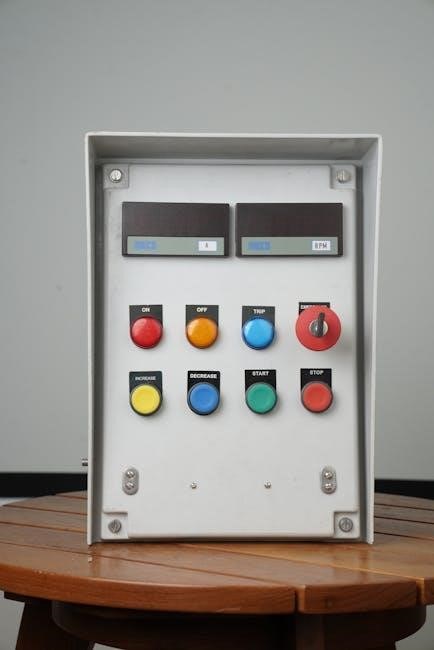
Following extended periods of inactivity, the capacitors within the ACS320 drive may require reforming to restore their full capacitance and functionality. This procedure is essential to prevent damage and ensure optimal drive performance upon restart. A guide (3AFE68735190) specifically addresses capacitor reforming for ACS50, ACS55, ACS150, ACS310, ACS320, ACS350, ACS355, ACS550, ACH550, and R1-R4 OINT-/SINT-boards.
The reforming process involves gradually applying voltage to the capacitors, allowing them to re-establish their dielectric properties. This prevents inrush currents and potential capacitor failure during initial startup. The manual details the recommended voltage ramp-up procedure and duration for effective capacitor reforming.

Always consult the dedicated guide before performing capacitor reforming, as incorrect procedures can damage the drive.
Cleaning and Inspection
Regular cleaning and inspection are crucial for maintaining the reliability and longevity of the ACS320 drive. Dust and debris accumulation can lead to overheating and component failure, impacting drive performance. Periodic visual inspections should be conducted to identify any signs of damage, such as loose connections, corrosion, or component deterioration.
Cleaning should be performed with compressed air to remove dust from heatsinks and other critical areas. Avoid using liquids or abrasive cleaners, as these can damage sensitive electronic components. Inspect the fan for proper operation and cleanliness, ensuring adequate airflow for cooling.
Document all inspection findings and cleaning activities to maintain a record of preventative maintenance.
Firmware Updates and Upgrades
Maintaining up-to-date firmware is essential for optimal ACS320 drive performance, benefiting from bug fixes, enhanced features, and improved security. ABB regularly releases firmware updates to address identified issues and introduce new functionalities. Before initiating an update, carefully review the release notes to understand the changes and potential impacts.
The FlashDrop (MFDT-01) is a recommended tool for convenient firmware updates. Ensure a stable power supply during the update process to prevent data corruption. Always back up the existing drive configuration before proceeding with a firmware upgrade, allowing for easy restoration if needed.
Follow ABB’s documented procedures meticulously to avoid rendering the drive inoperable.
Leave a Reply
You must be logged in to post a comment.